How can cities improve public spaces and protect residents from extreme heat without creating new inequalities?
This question is central to JUST4CARE and particularly relevant for municipal teams working on urban regeneration.
On 7 October, Madrid City Council, a JUST4CARE project partner, presented the project during a session dedicated to European funding as part of the second edition of its Urban Regeneration course for municipal staff.
The session introduced JUST4CARE’s approach to climate adaptation, exploring how public space, local culture, social infrastructure and coordination across municipal departments can contribute to fairer and more resilient neighbourhoods.
In densely populated urban areas, rising temperatures pose growing challenges for everyday life. But improving urban environments also raises important questions about fairness: who benefits from regeneration, who participates in shaping it, and how can improvements be made without contributing to the displacement of existing residents?
JUST4CARE addresses these questions by bringing together scientific evidence, local knowledge and collaboration between communities and public institutions. Introducing the project into municipal training creates an opportunity to connect these questions with the everyday work of public administrations. It also opens conversations about how climate justice can inform urban planning, interdepartmental coordination and future adaptation policies.
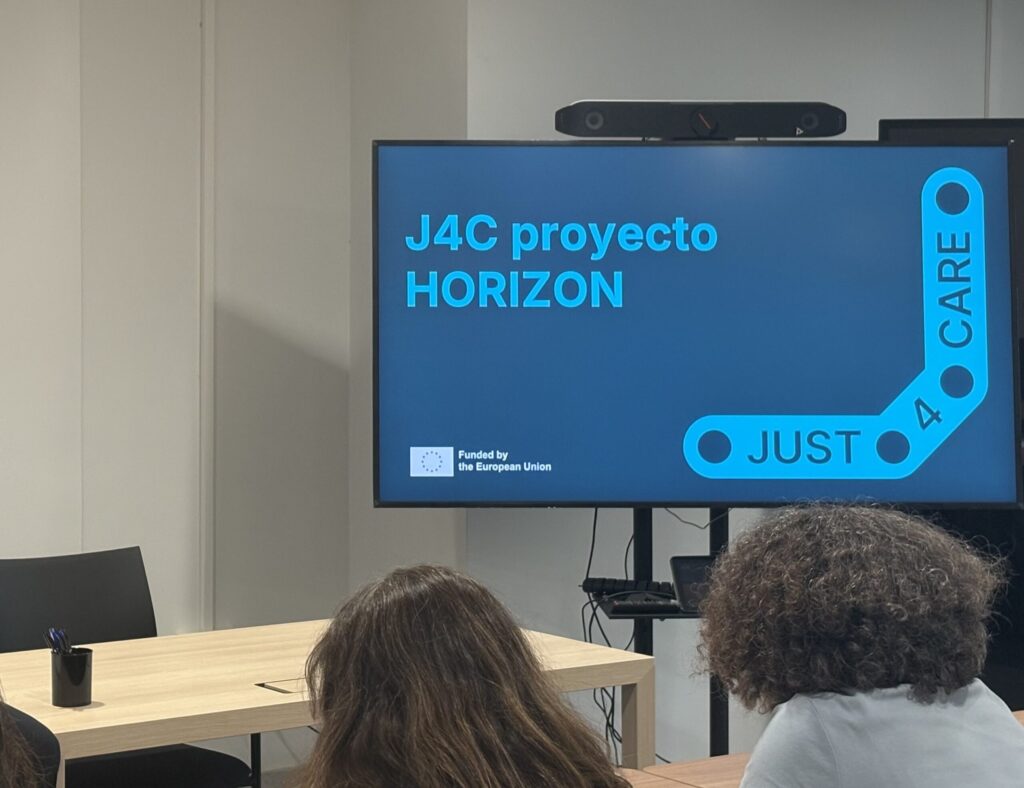
The session provided an opportunity to share JUST4CARE’s objectives with professionals from different municipal departments and explore their relevance for urban regeneration.
Because adapting cities to climate change is not only about changing urban spaces. It is also about how decisions are made, whose knowledge matters and who benefits from those changes.