
As a city in the global north, Oslo has traditionally experienced few heatwaves and thus had less experience with high temperatures and heatwaves than the pilot cities in the JUST4CARE project, making it particularly interesting for Oslo to learn from their experiences. Additionally, Oslo seeks to deepen its understanding of social vulnerability in the context of climate adaptation in Oslo, in order to improve the ability to take the needs of particularly vulnerable groups into account in various measures and climate-related initiatives.
“In JUST4CARE, we will take the lessons from the other cities and try to make them relevant for Oslo, focusing particularly on how climate justice principles can be applied locally, and how to prepare for more frequent and intense extreme weather events, such as heatwaves, which Southern European cities have more experience with.”
Marianne Mosberg (NIVA)
Oslo detailed information:
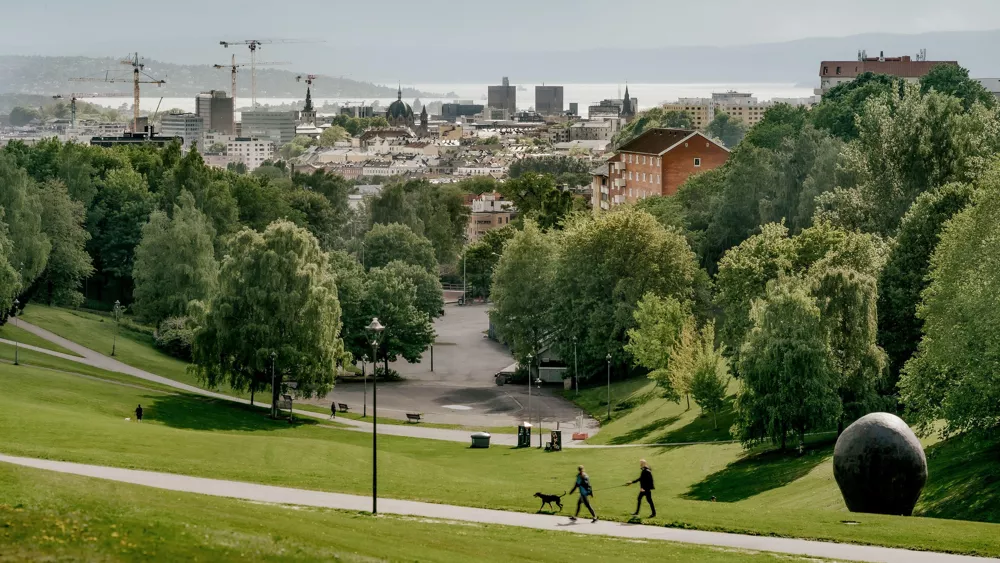
Oslo is the capital of Norway and the country’s largest city, with over 700,000 inhabitants.It is a compact city situated between the Oslofjord to the south and a nationally protected forest to its east, north and west. This close relationship with the natural environment is a central Norwegian value and underpins Oslo’s ambition to be a green capital. Oslo is also one of Europe’s fastest growing cities, with an increasingly international and diverse population that adds rich variation to the character of the city. The City of Oslo holds both municipal and county functions, and is responsible for a wide range of matters, including housing and urban renewal, parks and green areas, health care and social services, environmental issues, land use and urban planning.
Oslo specific vulnerability challenges
The climate in Oslo, as elsewhere, is projected to change significantly over the coming decades. According to the updated Climate Profile for Oslo and Akershus (Norwegian Centre for Climate Services, 2025), average annual temperatures are projected to rise by approximately 3°C, with the largest increase occurring in winter at around 4°C. Higher temperatures in summer increases the likelihood of more frequent heatwaves (defined in Norway as five or more consecutive days with a maximum temperature of 27 degrees or higher), which has already doubled in Oslo since 1990. With a changing precipitation pattern, longer periods of drought are also expected to occur. Annual precipitation is projected to increase by around 15%, distributed across winter, spring, and autumn, with a more modest rise in summer. Heavy rainfall is expected to grow substantially in both intensity and frequency, driving more stormwater runoff, larger and more frequent rain floods in smaller rivers and streams, and a greater occurrence of soil slides and debris flows, particularly in late summer and autumn. Overall, Oslo will likely experience higher temperatures, more intense precipitation, flooding, landslides, and storm surges, in the years to come.
More frequent and severe heat waves will increase the risk of dehydration, heat stroke, heart problems, and respiratory diseases. Extreme precipitation, urban flooding and landslides, particularly from soil slides and debris flows triggered by intense rainfall, also pose a risk to neighborhoods in high-risk areas, including in areas with no prior history of such events. Freeze-thaw cycles and icing disproportionately affect the elderly through falls and fractures, while emerging threats such as new vector-borne diseases, increased pollen levels, and reduced air and water quality represent broader health challenges for vulnerable groups. As with the other pilot cities, it is those with the least capacity to cope who are likely to be most severely affected by Oslo’s changing climate.
Many of these climatic changes are consistent with the trends observed across Europe, including in the pilot cities of Madrid, Ankara, Budapest, and Zagreb, particularly the growing risk of extreme precipitation and flooding, and increase in temperatures and heatwaves. As a northern city, Oslo has had less need and therefore also has less experience with dealing with high temperatures and heatwaves than the pilot cities in the JUST4CARE project, making it particularly interesting for Oslo to learn from their experiences.
Oslo alignment with JUST4CARE
Oslo has set ambitious goals when it comes to climate action and resilience. In 2015, the city resolved to become a climate-resilient city. Oslo’s current Climate Strategy towards 2030 sets out a vision for strengthening the city’s ability to withstand climate change toward 2030, while preparing for the more significant changes expected by 2100. In the strategy Oslo commits to a 95 percent reduction in direct emissions by 2030, alongside targets addressing climate resilience, energy, land use and indirect emissions. Oslo’s strategy also emphasizes the importance of national and international cooperation to share knowledge and experience across cities and countries.
The City of Oslo is also currently developing a revised Climate Strategy towards 2040, to strengthen Oslo’s climate work and adapt the strategy to new challenges – locally and globally. While the goal of a 95 percent reduction in emissions by 2030 remains fixed, the new strategy will likely also include targets for climate adaptation. Oslo is also working to integrate climate considerations as a precondition in urban development (buildings and infrastructure), and to safeguard the already built city, through requirements and guidance.
Oslo as part of the Community of Practice
Through NIVA, JUST4CARE is supporting Oslo in incorporating a strategy to address social vulnerability to extreme weather into the city’s new Municipal Climate Strategy, currently under development.
This work aims to help identify the groups most affected by climate risks and integrate equity and justice perspectives more explicitly into Oslo’s climate adaptation approach.
Stakeholder workshops have already been conducted with municipal agencies and social councils. Next steps include engagement with city districts, the voluntary sector and social housing organisations, so that the strategy can better reflect everyday vulnerability, local knowledge and the needs of people with fewer resources to prepare for extreme weather.
Explore more replicant cities: